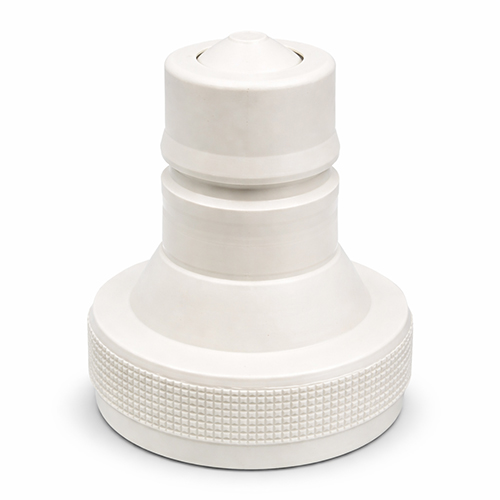
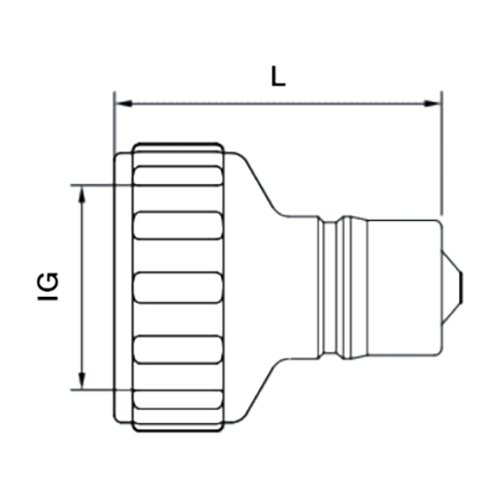
Dry Disconnect Coupling, Male Adapter with IBC S80×8 Thread
Lead Time: on Request
|
||||||||||||||||||||
|
The dry disconnect coupling ensures clean, fast, and safe connection and disconnection of lines – without any product loss. Ideal for use with IBC containers as well as in chemical and industrial applications. Thanks to its robust design and high chemical resistance, the coupling is perfectly suited for demanding and aggressive media. Your Benefits Drip-free connection and disconnection Maximum safety during media handling High resistance to chemicals Quick and easy operation Robust and durable design Configuration Male adapter for IBC S80×8 thread Materials Locking / actuation ring made of PE 500, not in contact with media, other materials available on request Spring materials: Stainless steel 1.4310 with E-CTFE coating Additional coupling materials (e.g. ECTFE) or sealing materials (FFKM) available on request |
|
|||||||||||||||||||

Information:
Information:
Information:
Information:
Information:
Information:
Information:
Information:
Information:
Information:
Information:
Information:
Information:
Information:
Information:
Information:
Information:
Information:
Information:
Information:
Information:
Information:
Information:
Information:
Information:
Information:
Information:
Information:
|
||||||||||||||||||||||||||||||||||||||||||||||||||||||||||||||||||||||||||||||||||||||||||||||||||||||||||||||||||||||||||||||||||||||||||||||||||||||||||||||||||||||||||||||||||||||||||||||||||||||||||||||||||||||||||||||||||||||||||||||||||||||||||||||||||||||||||||||||||||||||||||||||||||||||||||||||||||||||||||||||||||||||||||||||||||||||||||||||||
Zero Leakage, Maximum Safety – The Role of Dry Disconnect Couplings in Industry |
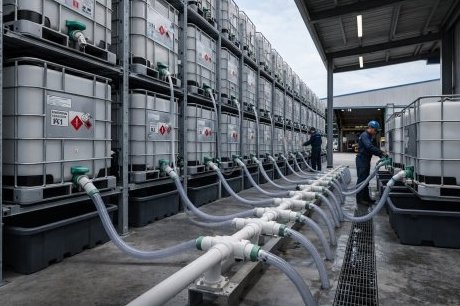 |
Introduction Dry disconnect couplings are a key safety component for the closed transfer, filling, and emptying of chemicals in industrial facilities. Especially in the chemical industry, in the handling of hazardous substances, and in filling processes involving IBC containers, they ensure leak-free, low-emission, and compliant operation. For plant managers, engineers, and safety officers, dry disconnect couplings are not merely a technical option, but in many applications represent the state of the art in accordance with accident prevention regulations and technical rules. 1. Design and Function of Dry Disconnect Couplings A dry disconnect coupling consists of two functional components: - Male adapter - Female coupler Both sides are equipped with integrated shut-off valves. These open only when fully connected and close automatically when disconnected. This ensures: - Reliable prevention of hazardous media leakage - Drip-free connection and disconnection - Minimization of vapor and liquid emissions The result is a closed transfer system that meets current safety requirements. Relevance for Accident Prevention and Legal Requirements The use of dry disconnect couplings is closely linked to occupational safety, hazardous substances legislation, and industry regulations. In many cases, they are effectively required to comply with minimum legal standards. |
|
1. Hazardous Substances Ordinance (GefStoffV) Obligation to minimize exposure to hazardous substances Priority of technical measures over organizational and personal protective measures Use of closed systems where state of the art ➡️ Open hose connections without drip protection are no longer permissible in many applications if dry disconnect couplings can be used. 2. TRGS 500 – Protective Measures Clear requirement: emissions must be prevented at the source Liquid losses and splashes must be avoided through suitable connection systems ➡️ Dry disconnect couplings meet these requirements through their self-closing valve system. 3. DGUV Rule 113-001 (formerly BGR 500) Requirement for safe, leak-tight connection systems when handling liquids Prevention of skin contact, inhalation, and uncontrolled release of substances ➡️ Systems without defined sealing function during disconnection are considered safety-critical. 4. BG RCI Guideline – Filling and Emptying of IBC Containers Recommendation of defined coupling systems instead of open hose connections Prevention of residual quantities, dripping losses, and operating errors ➡️ Dry disconnect couplings are considered a recommended solution representing the state of the art. Technical Advantages for Industrial Use - Maximum safety - No release of hazardous substances during connection or disconnection - Reduced risk of burns, poisoning, and explosions - Regulatory compliance - Supports compliance with GefStoffV, TRGS, and DGUV requirements - Reduces liability risks for operators and responsible personnel - Emission-free media transfer - Closed systems prevent environmental contamination - Particularly relevant for water-hazardous substances (AwSV) - High process reliability - Defined connection without risk of misconnection - Reproducible processes in filling and transfer operations - Materials and Chemical Resistance Dry disconnect couplings are available in various chemically resistant materials: - Polypropylene (PP): universal for many chemicals - Polyethylene (PE): high resistance to aggressive media - PVDF: for highly corrosive and oxidizing substances - Stainless steel: for high pressures, temperatures, and mechanical stress Sealing systems (e.g. EPDM, FKM, FFKM) must be selected according to the medium. Material compatibility must always be verified based on the specific medium and temperature conditions. Typical Applications - Filling and emptying of IBC containers - Chemical transfer in production plants - Filling stations for acids, alkalis, and solvents - Dosing and mixing processes - Use in ATEX zones (for electrically conductive versions) - Operation, Maintenance, and Responsibility Even when using dry disconnect couplings, operators remain responsible for: - Performing a risk assessment in accordance with GefStoffV - Regular inspection and maintenance of coupling systems - Ensuring depressurized conditions before disconnection - Training personnel in handling hazardous substances and coupling systems - Use of appropriate personal protective equipment (PPE) - Conclusion: Dry Disconnect Couplings as a Safety Standard Dry disconnect couplings are not optional accessories, but in many applications represent the state of the art for compliance with accident prevention regulations. They enable: - Safe, closed transfer of substances - Maximum reduction of emissions and risks - Legally compliant operation For chemical companies taking responsibility for people, the environment, and their facilities, dry disconnect couplings are therefore an essential key technology. |
Optimize your shopping experience with our detailed delivery information |
Partnership at the highest level. |
|


|


|


|


|


|


|