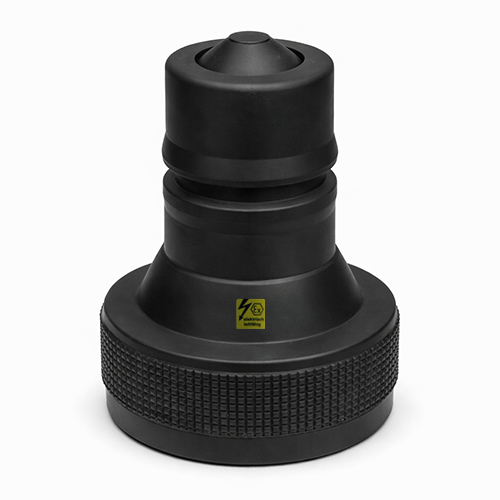
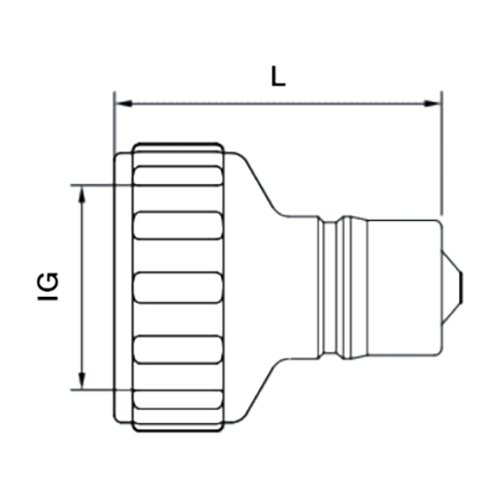
Electrically Conductive PE Dry Disconnect Coupling, Male Adapter for IBC S60×6 Thread
Lead Time: on Request
|
||||||||||||||||||||
|
The dry disconnect coupling ensures clean, fast, and safe connection and disconnection of lines – without any product loss. Ideal for use with IBC containers as well as in chemical and industrial applications. Thanks to its robust design and high chemical resistance, the coupling is perfectly suited for demanding and aggressive media. Your Benefits Drip-free connection and disconnection Maximum safety during media handling High resistance to chemicals Quick and easy operation Robust and durable design Configuration Male adapter for IBC S60×6 thread Materials Spring materials: Stainless steel 1.4310 with E-CTFE coating Additional coupling materials (e.g. ECTFE) or sealing materials (FFKM) available on request |
|
|||||||||||||||||||

Information:
Information:
Information:
Information:
Information:
Information:
Information:
|
|||||||||||||||||||||||||||||||||||||||||||||||||||||||||||||||||||||||||||||||||||||||||||||||||||||||||||||||||||||||||||
ATEX-Relevant Assessment of Dry Disconnect Couplings |
 |
1. Initial Situation in Potentially Explosive Atmospheres In areas with a potentially explosive atmosphere (e.g. Zone 1 or 2), a risk arises whenever flammable vapors, gases, or aerosols are released and mix with air. Ignition can occur even with very low ignition energies, for example due to electrostatic discharges or hot surfaces. During the filling and emptying of IBC containers, open or leaking connections in particular represent a critical source for the formation of such atmospheres. 2. Functional Characteristics of Dry Disconnect Couplings in the ATEX Context Dry disconnect couplings contribute to risk minimization due to the following design features: Closed system: Lines carrying the medium remain tightly sealed during connection and disconnection Minimized release: Virtually no leakage of liquid or vapor → reduced formation of explosive atmospheres Defined coupling mechanism: Valves only open when fully connected → no intermediate states with leakage Automatic shut-off: When disconnected, the system is immediately sealed again 3. Contribution to the Prevention of Ignition and Explosion Risks The use of dry disconnect couplings supports several key ATEX protection objectives: 3.1 Prevention of Explosive Atmospheres - The dry, low-loss connection significantly reduces the release of flammable substances. → Supports primary explosion protection 3.2 Reduction of Electrostatic Hazards A controlled, closed media flow: - reduces turbulence and spray mist - minimizes charge generation mechanisms - enables defined grounding concepts via metallic connection systems 3.3 Prevention of Leaks as a Source of Hazard - Open dripping points or wetted surfaces can evaporate and locally create hazardous atmospheres. - Dry disconnect couplings significantly minimize these effects. 4. Classification within the Explosion Protection Concept The use of dry disconnect couplings is to be understood as a technical protective measure within the meaning of ATEX directives and supports: Primary explosion protection: prevention of hazardous atmospheres Secondary explosion protection: reduction of potential ignition sources (indirectly) However, they do not replace: - zone classification - grounding measures - monitoring systems - suitable equipment in accordance with ATEX categories 5. Conclusion In ATEX environments, dry disconnect couplings make a significant contribution to plant safety, as they almost completely prevent product release during connection and disconnection. This considerably reduces the formation of explosive atmospheres and sustainably lowers the overall risk when handling flammable media. However, this requires correct selection, proper grounding, and integration into a comprehensive explosion protection concept. |
Optimize your shopping experience with our detailed delivery information |
Partnership at the highest level. |
|


|


|


|


|


|


|